Showing posts with label state parks. Show all posts

05 May 2016

Vacation 2015


You know you're getting behind on your blog when vacation posts are nearly a year old.

By the end of June last year I had realized that I had not taken off a single day yet that year.  The rest of the family had managed to spend time in Florida, twice for one, and they weren't nearly as interested in a family vacation that summer.  I was.  So we set aside three days of rest and relaxation in southwest Indiana.  Where it rained.  Nearly non-stop.  Still, it was a great time at Spring Mill State Park, German food in Jasper, Holiday World and the Lincoln Boyhood National Monument.  A photo-log of our trip:

They recreated a photo from 2004

Rain created a swollen mill race at Spring Mill

Doorway at Spring Mill


Recreated Abraham Lincoln Cabin

Lincoln Boyhood Home National Monument

Gettin' their German on in Jasper

Gloomy skies over the inn at Spring Mill State Park

28 April 2016

Gene Stratton Porter's Limberlosts

Limberlost Cabin, Geneva
Hoosier-born Gene Stratton Porter was an author and early naturalist who shined a bright light on the loss of natural places in late 19th and early 20th century Indiana.  It was at that time that massive acres of wetlands were being drained in favor of farming, and was a few decades before the movement to preserve natural areas in the state with the founding of the state park system in 1916.  Porter lived in Geneva at a rustic home she designed and called "Limberlost Cabin", taking its name from the Limberlost Swamp nearby.  Later in life she built a similar home in Rome City on Sylvan Lake on property she called Wildflower Woods and dubbed the home Limberlost North.

Limberlost North, Rome City

On a birding expedition to the growing re-establishment of the Limberlost wetlands area near Geneva, we stopped by her home in December.  Work took me to Rome City early this year and I stopped by her later home on a snowy day to capture additional photos.  Here's a photo log of Porter's two homes.

24 March 2016

The one, and for a long time only county memorial forest in Indiana

This unassuming pile of rocks is likely the base to the monument planned in the forest.
Back in 1943, the State of Indiana passed a new law permitting counties to hold wooded tracts of land under the concept that the land would address both conservation efforts and be used for recreational and "memorial" purposes.  The first such county to do so, as an example for others, was Marshall County in the northern part of the state.  It had an unlikely start, and for more than 50 years, remained the only county in Indiana to have a "Memorial Forest".  It was joined by Starke County in the last decade.

Here's an article about the forest that appeared in the Culver newspaper as written by Robert Kyle, a prominent Indiana journalist:

"A traveling troupe of beavers was responsible for the Marshall County Memorial Forest - the first established under the 1943 law permitting Indiana counties to acquire and maintain wooded tracts. First Sam Jones, an observant farmer living north of Burr Oak on Yellow River, reported he had seen signs of quaking aspen cut down in a small swamp across his line fence. Then Luke Duddleson, the county highway maintenance man, related in casual conversation around a tavern stove that "somethin'" was plugging up a culvert that led to the river "faster than I can clean it out." Russ Fisher, local authority on wildlife in general, and this writer out of curiosity visited the area several weeks later. We found a worthless 8O-acre tract, mostly blow-sand, and a sprinkling of long-neglected apple trees to one side of a swail surrounded by second-growth black oaks, through which a small stream trickled from a spring at the back of the property. Sure enough, there were evidences of beaver workings, and a small dam just back of the culvert was a second line of defense against Luke's determination to keep the culvert open.

During the hunting season Russ and I cruised the surrounding territory, flushed a number of wood ducks that had nested in small dead trees in the pond, and came to the conclusion that to preserve the beaver workings as an educational project we would have to acquire the area and reforest it. We talked the situation over with Harry Medbourn, county commissioner from our district, who came forth with the idea that the county buy it, taking advantage of the 1943 law, and make it into a recreational area. Meanwhile, Harry carried the idea to the other commissioners, Justin Myers and Ben Smith, who looked favorably upon using county funds to buy the acreage. By that time, public opinion was sounded out and sentiment, both favorable and otherwise, was fomented, and finally the opposition ran out of arguments, and funds of $1,600 were set aside, with the blessing of the Indiana Board of Tax Commissioners, and the property was acquired. Next Ted Shaw, Purdue extension forester and at that time acting state forester while Ralph Wilcox was in service, was contacted. He brought expert technical knowledge along with remarkable vision to the undertaking. His plan was for a model or "pilot" county forest from which other communities could get encouragement to reforest their waste land.


Russ enlisted the services of 18 active county conservation clubs and was appointed chairman of a planning committee consisting of Harry Lower of Plymouth, present conservation officer; Herb Sloan of Bremen, former conservation officer; Otto H. Grossman of Argos, ardent Waltonian; Mrs. F.W. Bates of Culver, president of the Marshall County Federation of Women's Clubs, and Orner Bixel of Plymouth, president of the County Council of Conservation Clubs. This committee, by donations, accumulated the $250 necessary to order the trees from the Division of Forestry and supplied the volunteer labor to clean the land and assist in planting. Boy Scouts, 4-H Clubs, neighboring farmers, conservationists and other interested groups planted 22,000 trees.  Nearly one-fifth of the area was hand planted due to the roughness of the terrain. Fire lanes, which surround and transect the area, were plowed and will be kept cultivated throughout the summer as protective measures. "The work resembled an old-fashioned barn-raising job," Ted added. "Everybody pitched in and got the job done. The old and the young were there, the women and the men. And they did a good planting job. Survival is very high to date." Future plans call for the planting of low-growing game food species such as the dwarf chinquapin oak, which had recently been found growing wild nearby. The development of the memorial shrine and natural amphitheater is the next step on the program. Plans are now being drawn. This memorial, possibly to be undertaken by county veteran organizations, will consist of planting hardwoods, with suitable markers as memorials to the 90-odd service men from the county who gave their lives in World War II. What Marshall County has done can be duplicated in every county in the state with a moderate expenditure of money and organized effort. It is admitted that the county forest is not the solution to our reforestation problems, but it is the initial step in that direction."

15 March 2016

Winter Hikes

Tippy River State Park

Sunday afternoons and evenings often find me chillin' on the recliner, watching the Simpsons and the news.  It's quiet around our house on Sunday nights since both kids are in youth group now, and my wife teaches the 5th-6th grade program.  And then one day about two years ago, a buddy asked me if I wanted to start hiking with him on Sunday nights.

Hmm....give up my warm comfy chair to hike in, sometimes, the teens, drudging through knee-deep snow trying to keep up with a guy who is a half-foot taller than me (or close).  Sure, I love being outdoors just that much to endure such craziness.  While those trips have become less frequent in the past year, we do still manage to hit the trails occasionally.  And we talk-a fair amount-which is hard to do when you're winded and trying to keep up.

Stretching far (ok, an hour or so) and near (local greenways trail), we have successfully hiked every state and county park, forest, and preserve-or so it would seem and would follow it up with a hot supper complete with coffee.  No offense to my high school friends out there, this was not your thing-I get that, but man would I have been all over it.

There is something about the woods, even in winter, that direct our thoughts to our Creator, of course it helps that the hikes come on the heels of a Sunday sermon.  Regardless, I'm reminded that we are but just a small part of this bigger thing around us, separate because He created us in His image, yet entrusted with the ability to destroy or nurture what cannot protect itself from us.  In that sense, it is as though God gave us a parallel between Himself and man.  What we choose to do with His creation is a reflection of how we view the Creator Himself.  So far, we've not done that great of a job.

07 January 2015

Cowles Bog at the Indiana Dunes National Lakeshore


My appreciation for the Indiana dunes began several years ago when researching the early preservation movement in the dunes region, headed up by notable folks like Jens Jensen, and stand-out botanist Dr. Henry Cowles of Chicago who completed pioneering work in ecology in the dunes.  While I haven't extensively explored the dunes area (outside of the state park), I have enjoyed a few hikes in the area.  Recently a buddy and I hiked the trail through Cowles Bog, one of the most ecologically significant areas of the dunes and named for the good doctor who helped place it on the map.

The bog is estimated to be about 8,000 years old and is described as a "fen" or marsh area covered with mosses and sedges.  The bog was named a National Natural Landmark in 1965, about the time the National Lakeshore was created.  In 1913, Dr. Cowles headed up an international excursion to the bog, attended by scientists from around the world who came to witness one of the most ecologically-diverse areas in the United States, only behind Yellowstone Park and the giant redwoods area of California.

Yep-right here in Indiana.


03 November 2014

Fall into our State Parks

Versailles State Park, est. 1934
It's been said that a picture is worth a thousand words, so I'll let the pictures do the talking in this post.  Fall at Indiana's state parks.  We owe quite a debt to our forefathers for setting aside these lands and establishing our state park system in 1916.

Potato Creek State Park, est. 1977
Kankakee State Fish & Wildlife Area, est. 1927
Tippecanoe River State Park, est. 1943

Brown County State Park, est. 1929
Clifty Falls State Park, est. 1920
Harmonie State Park, est. 1966


05 March 2014

North Liberty "Gateway to Potato Creek"

North Liberty's Downtown-the Yum Yum is on the right
One of the most recent listings to the National Register in Northern Indiana is one of the smallest downtowns to receive that recognition.  North Liberty's downtown, just a block long, was a lively place in its day.  The town is looking to the future by celebrating its past.  One place, the Yum Yum Shoppe, has become one of our favorite spots for pizza and ice cream...it's amazing how the car can find its way down lightly-traveled highways for ice cream.

North Liberty was platted in 1837 by Daniel and James Antrim.  It was surveyed by the St. Joseph County surveyor, T. W. Bray.  It is located at the conjunction of sections 28, 29, 32, and 33 in Liberty Township.  Liberty Township is recognized as one of the earliest settled townships of St. Joseph County.  During the 1850s, the land in the township began to be cleared for agricultural purposes.  Farming and lumber were the chief industries in the township by the 1880s.  A total of five sawmills were in operation by that time.


The first election in the township was held at James Antrim’s house in North Liberty in 1837.  The first house on a platted lot in the town was constructed in that same year by James Downey.  Four additional homes were built in the same year.  A gristmill was built in North Liberty in 1837 and a sawmill was constructed in 1839 by Hiram Bean and Alonzo Hill.  The first school was constructed in 1840 and in 1868 a high school building was constructed in North Liberty.  The first church was organized and constructed by the Methodists in North Liberty in 1851.  By 1880, there were three churches, the Methodist, Seventh Day Adventist, and Episcopal churches.  The town’s cemetery was established in 1842.  The Cole Brothers constructed a large planing mill and manufacturing facility in 1866.  The establishment burned in 1871, but was reincorporated in 1873 as the North Liberty Manufacturing Company which continued into the 20th century.  The company manufactured wagons and buggies.

By 1880, the population of North Liberty reached about 400 people.  At the end of the 19th century an extension of the Wabash Railroad and the arrival of the Chicago Belt Line Railroad, which was solely a freight line, assisted the general growth of the town and its industries.  North Liberty was incorporated as a town in 1894.  By 1903, the population had grown to 504 people.  Sidewalks were placed in the town in 1912 and in 1913 the community was preparing to be illuminated with electrical lights.


The county 4-H fair was first held in North Liberty in 1928; it was held in the downtown until about 1935 when it relocated to another location in St. Joseph County.  After the arrival of the railroads and general conversion of land to agricultural production the town and township had slow measured growth during the remaining part of the 20th century.  North Liberty remained the only village in the township.  The town had a population of 977 people in 1940.  In 1960, the population had grown to 1,241 people.  By 1978, when Potato Creek State Park was established in the township, the population of North Liberty remained virtually unchanged at 1,250 people.

04 November 2013

Everglades of the North


What I imagine the great Kankakee Marsh looking like this time of year....taken at the Kankakee State Wetlands
No doubt at least a few of you have watched the program on local public television entitled "Everglades of the North".  The show has been on once or twice, and is being featured at the Marshall County Genealogical Society's annual meeting this month.

The "everglades" refer to the vast inland Kankakee marsh that once extended from the western regions of Saint Joseph and Marshall Counties westward to the state line following the watershed area created by the Kankakee River.  The stories about this area are fascinating.  Isolated islands of oak trees on sand bluffs called oak savannas filled the marsh.  Vast wetlands filled with waterfowl would "blot out the sun" when lifting off en mass.  Hunters and trappers used the area from prehistoric times into the first decade of the 20th century.  These included presidents and tycoons who came to well-established hunting lodges along the Kankakee.

And then man felt that they needed many more acres of less-than-marginal farmground for production and the great dredge began.  The land went dry.  The wildlife left.  And the lodges became shuttered as the huntsmen became as rare as the game they sought.

C. 1880 map of Newton County, Indiana showing Beaver Lake
I'm admittedly fascinated by historic landscapes-those untouched by man.  I often try to imagine on this rolling acreage we call home, what it looked like 200 years ago before the ax fell the tree and the plow turned the sod for the first time.  So imagining the great Kankakee marsh becomes almost dreamlike because of its vastness.  The documentary about the everglades of the north included mention of a huge lake called Beaver Lake that existed in northern Newton County.  The lake was over 36,000 acres.  To put this in perspective, the largest natural lake in Indiana today is Lake Wawasee......it measures just over 3,000 acres, or nearly one-twelfth the size of Beaver Lake.  The great lake was drained when a ditch was completed between the lake and the Kankakee in 1873.  Lemuel Milk the "Prairie King" was responsible for buying the lake and draining it to sell land.  About 1/10 of the lake remained, though most of its marshes were dry.  Within 20 years the last of the lake dried up.

The sole reminder of Beaver Lake and Bogus Island, on U.S. 41
Outlaws including horse thieves and counterfeiters used an island in the middle of the lake as a hiding place from law enforcement.  The island was called Bogus Island.  It was several acres in size and 75 feet at its precipice.  A recent visit to the area revealed that the island was likely carted away for sand many years ago.  Today a portion of the lake bed is owned by the Indiana chapter of the Nature Conservancy and is filled with prairie grasses.  The site is a few miles south of Highway 10 on Highway 41 in Newton County.  While I applaud the work of the Nature Conservancy, one can't help but get a sick feeling in their stomach when faced with the loss of one of the largest, and most unusual natural features in Indiana.

12 February 2013

Perpetual Clearing?


It is hard to believe that it's been 5 years ago this month since I wrote about my experience in a cabin at Whitewater State Park.  I couldn't have appreciated how much that time away for a "spiritual retreat" would come to mean to me.  I walked away from that cabin with the understanding that God had brought me into The Clearing. ...a time in my life before which, and after which, all hell had broken loose.

There are times when I'd like to go back to the cabin.....back to the clearing.  But I know that's not where life is at right now.  And I realize, had it not been for the short clearing I had found myself in, spiritually I don't know that I could have survived such a significant test of my faith at my church, or when I launched out on my own only six months later.....which would have come as a surprise even to that guy held up in the cabin.

In some negative ways now I feel like I am in a perpetual clearing.........or maybe I'm just not seeing any path to continue on.  Don't get me wrong, life is good....and life is certainly quiet, but I feel like I've slumped into some kind of retirement out here on the Hill.  And I don't like that feeling.  I am busy, I am productive, and I feel like I'm giving back.....but somethin' sure is a missin'.  Patience has never been my strong suit.

20 October 2012

HR's Raid on Corydon

at Morgan's Raid battle site
This summer the family got away for a few days to southern Indiana.  It seems that given the options, we almost always choose to vacation in the Hoosier state.  Go figure.  Earlier this summer we were at Turkey Run, a halfway point between family graduations in Greencastle and Lafayette.  Having the hiking trails of Turkey Run and rippling waters of Sugar Creek as a stopover point is a pretty good deal.

Indiana's first state capitol
In August we headed further south and went to McCormick's Creek State Park, visited with some friends in Bloomington, stayed in Corydon, then visited the Falls of the Ohio State Park before making a b-line back home.  Corydon just oozes Indiana history, and being the Hoosier heritage geek that I am....I soaked it up big time.  Our trip included stops at our first state capitol building, the governor's first residence, and the formerly massive elm under which the state constitution was adopted.  "Constitution Elm" is but a large stump today.  There are parallels I could draw here, but I'll keep this positive.

Legislature Hall, state capitol

Second floor hall, state capitol
Lest you think it was all history, the family also played a round of "black light golf" complete with 3D glasses and found one very remarkable old fashioned candy store/ice cream fountain.  But then, I guess I would also have to include our visit to the only Civil War battlefield site in the state, on a hill on the south side of Corydon, where Morgan's Raiders clashed with the local militia.

Governor's house, kitchen
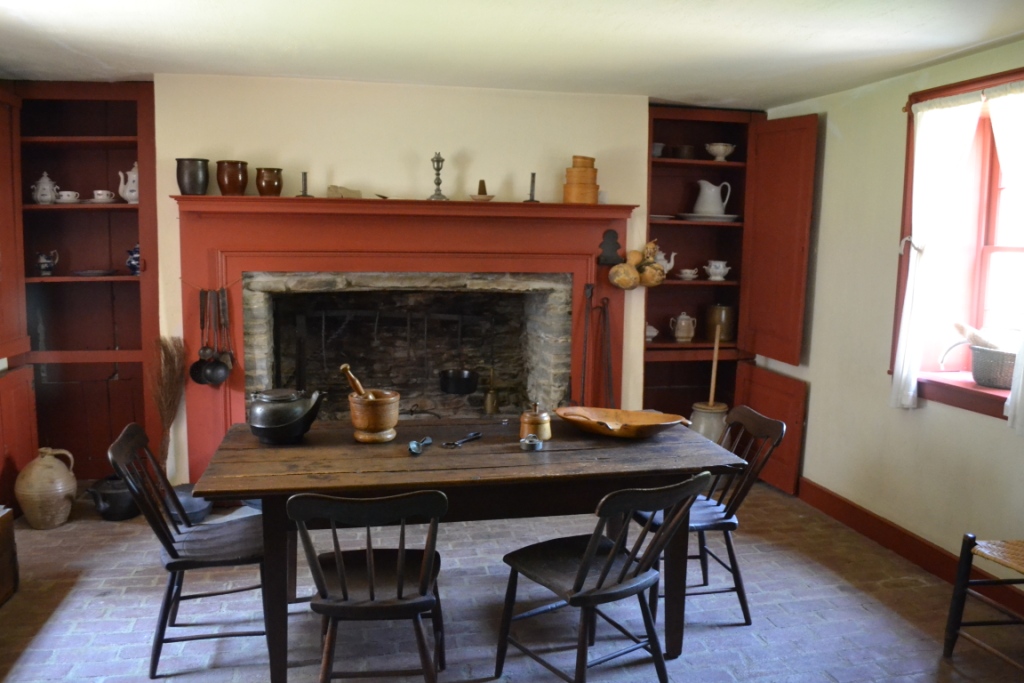
Man, I wish our dining room looked like this!

Constitution Elm

Old fashioned soda fountain & candy store
And we continued that drive south of Corydon, all the way to Boone's Cavern.  Squire Boone, the brother of Kentucky's famous son, Daniel, established a farmstead around a large cavern he discovered.  It was our kid's first cave experience.  Aside from some kicking and fighting, we did all right.  I had been in the cavern back in 1996 with a college buddy.  Since that time a portion became too unsafe for the owners' insurance company to accept responsibility for, so the hike in and out, while still worth it, was a bit repetitive....which may have led to some of the fighting.

Squire Boone Cavern and Mill

21 April 2012

Monuments Jensen left behind


Ostermann Monument, Dyer, IN (rear) by Jens Jensen

I've written here before about famous landscape architect Jens Jensen who created a movement at the beginning of the 20th century that was, well, a century ahead of its time.  Jensen promoted a form of natural landscape design intent on using native plantings and stonework that reflected a regional, and specific eco-system, in which the design was created.

This, to me, was a greater triumph than his colleague on the architecture side of design, Frank Lloyd Wright, realized.  While Wright was a leading force, and a master, for new architecture-he also rode the wave of a society that was desperate for a break from tradition.  Jensen, on the other hand, was positioned at the pinnacle of time during which a classical "city beautiful" movement had crept into nearly every community-large and small.  Jensen rebuffed the classical arrangement of the landscape, certainly, but his larger message was running counter-culture to American ideas about the use, or abuse, of land.

Jensen sought the preservation of the landscape and the reestablishment of natural areas.  Remarkably, this became a key feature of the Lincoln Highway Association's 1921 "Ideal Section" of road near Dyer, Indiana.  They turned to Jensen to design the Ideal Section-which would be touted across the country as an example of the most appropriate and modern way to design highways.  Jensen designed footpaths removed from the concrete road, stone bridges, and even concrete light poles that blended with their surroundings.  Does this not sound like common themes of our Transportation Enhancement projects today?

When Henry Ostermann, a native Hoosier and major promoter of the Lincoln Highway, was tragically killed in Iowa, the Lincoln Highway Association turned to Jensen again to design a fitting tribute to Ostermann-and it would be located in the Ideal Section.  The monument, and a monument created during the 1960s by the Daughters of the American Revolution for the Ideal Section, stand together on the south side of U.S. 30 (Lincoln Highway) and are all that remain of this tribute to road-building innovation.

Jensen designed the monument in his tell-tale method of natural limestone laid to appear like stratified layers of bedrock, which form a bench-not unlike his trademark "council rings" only linear versus circular.  Jensen also incorporated an arch made of stones in which a plaque honoring Ostermann was placed.  It is currently awaiting restoration.

So my question in researching this site was "how prolific was Jensen in monument design?"  This is hard to know.  Jensen did a significant amount of work in Illinois, Wisconsin, Michigan, and Indiana.  Most of this work was residential and civic building landscape design in nature or city parks.  In a book published on Jensen an exhaustive list of his work was included and it lists only two projects that were purely monumental or commemorative in nature.  And both are in Indiana.  One is the Ostermann monument.  The other is a monument to his beloved Prairie Club, the organization that led early 20th century efforts to save the Indiana dunes at Lake Michigan.

Prairie Club Founation-Indiana Dunes State Park
The Prairie Club monument is located at Indiana Dunes State Park.  It was located nearer the historic gate house, but was relocated to the front lawn of the nature center.  I was curious about this other Jensen monument, so when making a trip for work, I swung by the Dunes for a look-and a hike.  The Prairie Club monument is also quintessential Jensen.  It has a more natural form, and a linear bench as well.  A unique feature is the brass snake fountain in one corner of it.

While the monuments certainly serve as tributes, as their creator intended, they also serve as monuments to one of the most important environmental leaders Indiana has ever had.  Thank God Indiana, and the Dunes, had Jens Jensen.

24 October 2011

Getting Away to Brown County


Today marks our 13th Anniversary. I think every year since our wedding we have made a point of getting away in the Fall to celebrate, except for last year. My wife insisted we get away for a few days so we landed in Brown County last week.


Last week-when the calender said October, but it clearly was late November monsoon weather.


This wasn't our first trip to lil' Nashville. Fortunately for past visits the sun was usually shining and the leaves radiated their colors. What stunk about this trip is that I had purchased a new toy-a really good camera-and wanted to try it out. I took two shots of our B&B. But, short of the weather, we had a great time. This is what the week looked like for us:


Tuesday night, after celebrating the Michigan Road Byway at High Point Orchard in Greensburg, we drove to Brown County State Park, hoping for a stay at the Abe Martin Lodge. After being charged the $5 entry fee at 9:15 p.m. I asked if it was refundable if there was no room at the inn. I was glared at. There was a room, thankfully, and the next morning we had breakfast in their dining room and drove through the park to check out the nature center and the rain-soaked leaves.


Then we drove into Nashville and met my parents at the Daily Grind Coffee House (they were on their way out of town). My dad calls the owner grumpy, but after watching my dad constantly goad him, I can understand why. We left there and meandered through the shops that included two artists' galleries. The first's clerk asked where we were from and when we said Republicania County, she said that's where her ancestors were buried. I asked what their names were and she said Boggs. I said, "really? I just wrote a National Register nomination for the Boggs homestead." They were the same; I plan to send her the document. The second gallery is a favorite stop of mine. As we looked at the paintings I noticed that several prints were created by Jim Gray (not blogger Grey); Gray was the name on a print we received for our wedding. Then I noticed a number of original "Matt Gray"s. I asked the clerk if the two were related and he said that Jim was his dad, and he was Matt. The $1000 price tag on his work was the only thing that kept me from buying a second generation Gray.


We had a bowl of soup for lunch at the Hob Knob Corner restaurant. If you've never been, you really need to go. Aside from the Brown County Courthouse kitty-corner from the Hob Knob, the building is the most historic place in town and was listed on the National Register many years ago. And the food is excellent. We checked into our B&B on the northwest corner of the downtown. The Hester House was built during the 1850s by a local judge and has been restored and turned into a Bed & Breakfast; not only is it one of the nicest places to stay in Brown County, it is also one of the most economical.


That evening we had a late dinner at the Artist Colony Inn (late for me is 6:30); it is one of the coziest places to dine in Nashville. And later we got coffee at the Muddy Boots Cafe' just a block from our B&B. I believe the place is fairly new; there were crowds there two nights in a row and live music, though when we ate dinner there on Thursday night only part of the band showed so the guitarist called it an early night.


Thursday we drove to Bloomington to visit the Bloomington Antique Mall in the old warehouse district. My wife had been there a week before and had seen a dining room cabinet she thought would be perfect for our house. It wasn't there any longer. The clerks told us to call the booth's owner in case she just switched it out. She had, and she had painted it for her own use. But she was still willing to bargain but couldn't accommodate a visit until late that afternoon. I didn't want to drive back from Nashville, so that perfect cabinet is sitting in her house today.


We drove on to Story, Indiana where we had lunch at the Story Inn. The town consists of a few houses and the inn and is a pleasant half hour drive from Nashville. When we drove up we saw a tour bus unloading. This hidden little gem is always busy and also accommodates folks from the other world......yes, it is supposed to be haunted. Back in Nashville we toured a few more shops including one potter's studio near the old Ferguson house. We visit J. Mills' studio every time we are in Nashville; he does exceptional work and has been operating from that location for as long as I can remember. We also ran into friends from Republicania County....that's happened more than once in Nashville.


Friday the sun came out. We left for home by way of highways 9 and 19 to absorb some of that fall-time beauty across the countryside we wouldn't get traveling up 465 and 31. This reads more like a travel logue, but I wanted to give a shout-out to some of the great places Indiana's famous fall retreat center has to offer......I just wish I had more pictures to go along with it. These are of the Hester House B&B.

19 July 2010

playing with panorama


Our camera started to go on the fritz a few weeks ago and since it assists in a major way with my livelihood I went out and replaced it with one that offered more features, had double the mega-pixels, and was almost a third the cost from when we bought the first one four years ago. Technology, right?


I got the camera just a few days before this year's kayaking excursion on Sugar Creek. I took this kid that I mentor since he likes camping, hiking and kayaking....yeah, like I need an excuse? We hit some trails at Turkey Run before camping at Shades then started our day long excursion down Sugar Creek from Crawfordsville to Clements Canoes the next day. I hadn't been on the "upper rapids" part of the trip before and it didn't disappoint. And we didn't pass a soul for four hours except for one guy fishing.

I thought this was clever...there are two of him!

This little trip gave me a great chance to check out the camera's abilities, but what I most enjoyed was its panoramic setting that created the picture by telling you where to turn, then automatically closed the shutter. How cool is that? So I practiced some, and messed up a fair amount, but some of the pictures turned out great.


The only thing I couldn't figure out is how to snap a picture with the timer...so holding the camera at arm's length would have to do. And the trip will be memorable since the muffler went out just outside of Logansport....that was a long, noisy trip and I'm sure the campers appreciated us rolling in late. Man, I do love it down there!


07 November 2009

Final Potato

This is my last group of pictures from the photo-shoot at Potato Creek State Park; although with the weather finally turning more Fall-like, I may shoot more this weekend. You might notice that sycamore and beech trees are featured a fair number of times-these are my favorite trees. Although understanding the characteristics of all the trees God made can make you appreciate every one. I like Sycamores because of their gnarly appearance, the striking contrast their white bark can provide in a landscape and the enormous leaves they produce (they should be the state tree I've long contended-we don't sing "through the tulip trees, for me..."). I also really like the beech tree. If you see a large old beech you know that you are in an ancient hardwood forest; the twig structure is also unique as is the contrasting smooth grey bark. You might also notice I try to use the blue sky as a backdrop or "canvas" for some of the pictures. I actually discovered this technique when I was about 12 years old. Sometimes it works, other times-not so much.


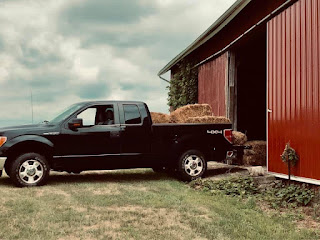
Ode to a Truck

Wednesday, I took my travel companion on its last trip, from which it didn't come home with me. I took it for a drive the day before, to...