Showing posts with label culture. Show all posts

27 June 2020

To the unknown god: toppling statues in our hearts


As a historian, I've been asked my thoughts on statues being toppled. Usually one word comes to mind: conflicted. Watching the events of 2020 unfold before us is remarkable indeed-and it's only half-over. Again, I think much of what we are witnessing is from years of built-up anger and rage that's been unaddressed in our churches (previous posts) and in our politics where compromise, or the unwillingness of, has become the litmus test for what qualifies a party loyalist. Failure to address the nation's original sin, slavery and Indian removal, from pulpits and platforms has led us to this time. We are reaping what has been sown.

As I watched one statue toppled from its massive granite base, left looking naked and no longer able to convey its purpose, I thought of that altar that Paul came upon in Athens, dedicated to the unknown god. And at that point, I understood why my response has been conflicted. At work in my own heart is a conflict between historian and Christ-follower. We see two dominant sides emerging in this debate, and both are worshiping the unknown god. One side is seeking justice by the elimination of reminders of oppression, however far-flung the connection to that may be. The other side, in its most devious words and actions, is looking to benefit from the propagation of holding onto statues, however divisive they may be. Both are in search of something they haven't been able to find: justice and justification.

     "So Paul, standing in the midst of the Areopagus, said: “Men of Athens, I perceive that in every way you are very religious. For as I passed along and observed the objects of your worship, I found also an altar with this inscription: ‘To the unknown god.’ What therefore you worship as unknown, this I proclaim to you. The God who made the world and everything in it, being Lord of heaven and earth, does not live in temples made by man, nor is he served by human hands, as though he needed anything, since he himself gives to all mankind life and breath and everything."

As an architectural historian, I realize many of these statues and monuments are placed in such a way to honor an event or individual, and often become part of the urban fabric in communities that embrace good planning and celebrate their past. We do neither of these well in Indiana, so Hoosiers are largely removed from this debate. As I mentioned to my intern the other day as we stood beneath it, Monument Circle is the one thing we did really well here. There are exactly two public monuments of statuary in my county. One is of Lincoln, seated in the main entry of the former high school that bears his name. The other is dedicated to Chief Menominee and the Trail of Death from the forceable removal of the Pottawatomie. I think we should also understand statues as monuments in terms of their development. Statuary became en-vogue at the turn of the 19th century when classical architecture rebounded and was primarily embraced in government building programs. Coupled with the "City Beautiful Movement" which employed urban design concepts of vistas and axis, monuments, typically topped with statues, hearkened ancient Greece from which the classical movement found its precedents. When you realize many of these statues were erected during the first few decades of the 1900s, and that practice is largely gone now, it begins to separate purpose from pride and patriotism.

Critical thought is in short supply these days, well heck, so is common sense and empathy. I am a fan of Teddy Roosevelt, with all of his flaws. I watched as New York decided the statue of him, mounted on a horse, with a Native American and African-American "in subjugation" should be removed. I understand the thought process, but I also point to the poignant reminder the statue provides of the way in which we saw our brothers as less than equals, in need of "saving" by the President. And I think what a great way to demonstrate the error of our thinking if interpreted correctly. This is where critical thinking needs to prevail. But then there are the statues that glorify the oppression of a people, the finger in the eye to our Union, and for some, justification of their deeply-held racist ideology. And for others, the hurtful reminder that others have that ideology. In that light, is the erection of a statue-or keeping it-a sin? I believe it is. Maybe this is part of the reason God covered it in His first two commandments: have no other God before me and make no image to which you ascribe worship. I think we are witnessing a lot of statue-worshipers today.

As Paul did, let me also introduce you to the real God, "he is actually not far from each one of us, for in him we live and move and have our being." He is not in statues, but we find Him if we seek Him in our hearts.

02 June 2016

A Home to come Home to


Time is ticking.  Mom and dad have talked about selling their house for over a year now, and they've stepped up the process by looking for a place in River City, and prepping the ol' homestead for the market.  This is going to be a big transition....in fact, they've never bought and sold a home.  When they were first married, they moved a mobile home onto grandpa's farmstead and within a few years built the house in a woods on the farm in 1973.  They've been there ever since.  And except for a few fragments of memories from my toddler days, the house they built is really the only one I can remember from my childhood days.


I know it is going to be difficult.  I can't imagine not having that house to come "home" to after more than 40 years.  Mom insisted on having a get-together over Memorial Day weekend, thinking that it may be the last time all of us siblings, and our kids...and grandkids, would be together in the house.  I don't even want to think about the monumental task of moving and downsizing.
My room-turned antique/plant room.  The only corner view in the house.
My grandparents were in their houses for 46 years and their entire lifetime since it was handed down from generation to generation.  My wife's parents have been in their house for about the same length of time as my parents.  People don't do this anymore these days.  We've moved once, after spending 11 years in our first house and going on 7 years at the farm.  At 11 years, we were some of the "oldest" neighbors in the neighborhood.  It seems that these days people are so disconnected to their homes, families, communities, neighborhoods and other circles that once held our broader communities together.  Our connections are now social media based and it makes me wonder if our inability to be civil in our discourse doesn't follow the trend to be disconnected in real time.

19 May 2016

Take it to the Ring...er, uh Hoop.


I knew Ted was Cruz'n for a bruisin' in Indiana when he made two fatal mistakes:

1) He told Hoosiers how to vote and
2) He called a basketball hoop a "ring" while trying to channel our favorite pastime to his advantage.

Maybe that's what happens when a transplanted Canadian crosses the border into Indiana.  If you're out campaigning you have to either get it right with the folks you're trying to win over or admit the heck you don't know their culture and move on.  If I ever run for president and go to California to campaign, I'll applaud surfers for their skill but you won't hear me talking about "catching a wave on that floaty thing".

And Hoosiers simply don't like to be told what to do.  Rolling into the primary and saying you struck a deal with John Kasich (my pick) and that his supporters should vote for Cruz I think left an odor most foul.  I think a good deal of uncommitted voters at that point doubled-down and voted for Kasich or thought forget those two and went Trump.

We Hoosiers are a funny bunch.

21 April 2016

Kayaking Wythougan


Here's a photo-log of my kayaking/photography trip down the Yellow River (Wythougan in Native American) last Fall with a buddy, who is a far better photographer than I am.  We're fortunate here in River City to have such a great river that features some really wonderful historic bridges.  It was a great float, until we realized we needed about an extra hour of daylight to make it back to my truck.


07 April 2016

St. Mary of the Assumption Catholic Church of Decatur


 I'm staying with the church theme here.

I have a project in Decatur that drew me into town about a year ago.  It wasn't the first time I had been in Decatur, but certainly the first time in a very long time.  I remembered seeing a giant unusual spire off of the main route that caught my attention, but not enough to draw me over a few blocks.  At the end of last year I went birding, yeah, that's what we call it, with a buddy over that way.  I mentioned my project and then mentioned seeing the church spire.


So, on our way back from the Limberlost restoration project, we swung through Decatur to drive past my depot project, and then over to see what was at the bottom of the spire.  Fortunately, my friend recognized that he had been to the church and since it was a Catholic church, St. Mary of the Assumption, he offered to go in with me.  I don't know if that's because he was afraid I might do some sort of Evangelical voodoo in it, or if he was concerned I might drop dead.  Regardless, we walked up to the doors and they were open.  And in I went.


The cavernous church was an impressive example of what was becoming a sort of "atomic age" architecture built in 1951 with some exceptional details.  The bell tower looks more like a spaceship landing than a housing for a bell that tolls for mass.  I think about how cool it would be to sit through a service or two in that building, though I noticed the feeling was more intimidating with this church compared to Tyson.  Maybe because it was darker, and larger-it felt as though the ceiling towered above me.


I appreciate good architecture, regardless of when it was built.  Good architecture can tell a story, not only in its form and composition, but it also tells a story about the people who inhabit it.  What they care about.  What they aspire to.  I had an exchange with a colleague who asked if the county intended to build a pole building, suggesting that we should aspire to build something that reflects who we are.  I responded that I feared that pole buildings did reflect our aspirations.

31 March 2016

Indiana Byways Passport Program


So, here is a great thing that we at the seven Indiana scenic byways have been working on since the beginning of 2015.  This is a great way to celebrate Indiana's bicentennial and really experience the Hoosier state.  We hope to see you on the road!

Indiana Bicentennial Byways Passport to Launch March 31st

The Indiana Bicentennial Byways Passport Booklet, containing routes for each of Indiana’s seven Scenic Byways, will be available on March 31st. The project is an officially sanctioned Indiana Bicentennial Legacy project and it will commemorate Indiana’s historic transportation corridors. A press conference and official kickoff event will be held at 2:00 PM at the Indiana Historical Society on March 31st to see the program off! The participating byways are: the Indiana National Road, the Wabash River Scenic Byway, the Whitewater Canal Scenic Byway, the Historic Michigan Road, the Indiana Lincoln Highway Byway, the Ohio River Scenic Byway and Indiana’s Historic Pathways. Scenic Byways pass through nearly fifty Indiana counties and account for over 1,000 miles of Hoosier Highways. The 32 page passport booklet contains a variety of stops from each byway and participants will be able to receive a stamp for checking into these stops. 

The Passport Booklet is a tool to explore scenic and historic resources in Indiana. All seven Scenic Byways display beautiful paths and historic transportation routes that tell the story of how Indiana was built. It is a road trip 200 years in the making!

Passports will be available on March 31st for a $2 suggested donation at each designated passport stop. More information on the participating Scenic Byways and passport stop locations can be found by visiting http://www.in.gov/indot/2827.htm. Please visit Indiana Byways on Facebook at https://www.facebook.com/IndianaByways/ for additional information and updates on the program. You can also share your photos and experiences traveling Indiana’s Scenic Byways.

10 March 2016

Hoosier bastions of pride

Warm

Now with kids in junior high and high school, our lives seem to become filled with activities that I wouldn't typically have found myself at a few years ago.  Our daughter, a cheerleader, had us going to junior high football and basketball games this year, while our son, in high school pep band, had us visiting the hardwoods at the local gym.

Cold
There are few places that celebrate community more than sitting in the stands off the grid-iron, or in the bleachers overlooking those bastions of Hoosier pride.  I will confess, I'm more of a basketball fan than football-likely because I have never caught on to all the rules of the latter.  And the fact that I'm never cold at a basketball game.  It's a joy, though, to see kids that I taught in Sunday school on the field or court, giving it their all.

08 March 2016

Channeling my inner Amish


Over the course of about the last two years, our preservation organization has been working on telling the "untold" stories of certain cultural groups and enclaves that settled in our county.  The Amish, who first settled in 1850, have become a large part of our population and continue to expand.  My great x3 grandfather, Samuel Hochstetler, was the first Amish to settle with his family in our county in that year, followed by four other families in the course of the next five years.

While on the path to discovery, our chief genealogist organized a meeting with the historian of the local Amish church and asked if I wanted to participate in the meeting.  He just happened to live at my great x3 grandfather's farm.  So, certainly.  He took us to the grave of my ancestor at the community's cemetery next to their first school.  And his grandson gave me a tour of the farmhouse and barn.

Last year, several cemeteries in that township were featured in a tour and my genealogist friend asked if I would be willing to play Sam Hochstetler and discuss the migration of Amish from Ohio to the area. I've done these cemetery tours before, but this one really caught my interest.  But, I needed to dress the part and our family gave up those simple clothes a long time ago.  A mutual contractor-friend of mine, an Amish fellow who was almost exactly my size, loaned his Sunday best so that I could look the part.  The clothes fit like they were customized for me.

And so, with many of the Amish gazing on that cold May day, I did my best to tell them about their history, which most seemed to know quite well.  Talk about a tough crowd.  The first thing I asked was how they used the bathroom with all of the hooks and flaps and straps.....evidently, that was taboo.  And then several poked at me with questions in Pennsylvania Deitsch.  It was both awkward and communal, if that's possible.

22 April 2015

20 years ago


This past Sunday marked the 20th anniversary of the terrorist attack on the Murrah Federal Building in Oklahoma City.  I remember having the television on in my grandfather's house, watching news coverage of the event.  It was unfathomable to me that so much hate could be generated by Americans against their government that they felt that they could act out in such a way that would claim the lives of 168 fellow-Americans, many of whom were children at a daycare.

In 2003, our family set out on a trip across Route 66 to see America.  It was important to me that we visited this site.  Here, in the absence of the former building, was a nearly still reflecting pool overlooked by the "survivor tree" and rows of empty chairs representing the victims.

Our son, then almost three years old, knelt down at the head of the pool to put his hands in the water.  That allowed me to snap this photo that captures, at least in my mind, the playfulness of innocence oblivious to what had transpired at the site.  An innocence that was stolen away from the families of the victims.  I truly hope that despite the political viciousness we experience today, multiple times that of 1995, we recognize that we're still one people with the most remarkable promise, and potential for good, that only America can offer.

15 April 2015

The Apotheosis of Lincoln & Washington


A box of old photos and photo albums was passed on to me last year from my aunt.  One album, assembled by my Moore ancestors as a memorial piece of the Civil War, included photos of the sons of Andrew Moore who enlisted from their Lowell, Indiana farm.  Three of the seven sons who served in the Union ranks did not come home.  I suppose one would question if the family thought the war was worth it.  Flipping to the back of the album, I think the answer is clear.  Nestled into their own gold-edged cardboard photo sleeves are images of Lincoln and Grant, including one image that I had never seen before.....and it seems like one of the most awkward Americana patriotic memorial photos I've ever seen.

The artist of "Washington and Lincoln in Apotheosis" is J. A. Arthur who created the image in 1865 shortly after Lincoln's assassination.  The image, which seems to have two versions, show Lincoln robed in black being greeted by Washington in the heavens.  Beckoning Lincoln to his eternal rest are hosts of angels in the upper left hand corner of the image, from which streams of light beam down on the presidents.  The angels are often cropped out or were removed in reprints of the postcard.  The postcard, which depicts Washington placing a laurel wreath on Lincoln's head, was produced in significant numbers in 1865.

I can't imagine the depth of sorrow felt by so many families across the country who had lost sons, husbands, and fathers during the war.  Then, as news spread from Appomattox, the elation felt by the nation as the long war was finally behind them....only to be covered again by the dark curtain of grief days later as news of Lincoln's death took hold of the country.  Commemorating the 150th anniversary of the close of the Civil War and Lincoln's death have been marked by a number of events throughout the country, but I thought-as odd as the postcard seems-sharing this image gives just a hint of what the country was feeling 150 years ago today.

24 February 2015

Zax ByPass


I wish I had more time to blog.
I always find it therapeutic and it seems that a handful of you actually enjoy reading Hoosier Happenings as well.  The last several weeks have found me steeped in new responsibilities to which I've tried to throw myself at wholeheartedly so combined with work, something had to give.  But I saw a post on Facebook last night concerning community development that prompted this recollection of a story by the great philosopher, Dr. Seuss, and maybe sums up a great deal of my experiences in these first few weeks........and honestly, seems like a reflection on nearly the last "fifty-nine years" as we stand here in the prairie of Prax beneath the Zax ByPass.  Let's hope for an off-ramp and begin to pull in the same direction, together, because the world isn't going to stand still-it will grow.  Lately it's been growing around and without us.

The Zax by Dr. Seuss

One day, making tracks
In the prairie of Prax,
Came a North-Going Zax
And a South-Going Zax.

And it happened that both of them came to a place
Where they bumped.  There they stood.
Foot to foot.  Face to face.

"Look here, now!" the North-Going Zax said.  "I say!
You are blocking my path.  You are right in my way.
I'm a North-Going Zax and I always go north.
Get out of my way, now, and let me go forth!"

"Who's in whose way?" snapped the South-Going Zax.
"I always go south, making south-going tracks.
So you're in MY way!  And I ask you to move
And let me go south in my south-going groove."

Then the North-Going Zax puffed his chest up with pride.
"I never," he said, "take a step to one side.
And I'll prove to you that I won't change my ways
If I have to keep standing here fifty-nine days!"

"And I'll prove to YOU," yelled the South-Going Zax,
"That I can stand here in the prairie of Prax
For fifty-nine years!  For I live by a rule
That I learned as a boy back in South-Going School.
Never budge!  That's my rule.  Never budge in the least!
Not an inch to the west!  Not an inch to the east!
I'll stay here, not budging!  I can and I will
If it makes you and me and the whole world stand still!"

Well....
Of course the world didn't stand still.  The world grew.
In a couple of years, the new highway came through
And they built it right over those two stubborn Zax
And left them there, standing un-budged in their tracks.

19 November 2014

Hagel des Vaterlandes

St. Stephens Cemetery, Dearborn County, IN
 And this is why I was surprised by my less-than-overwhelming German DNA results.

I took my mom and her sister on a whirlwind genealogical tour across the U.S. 6 corridor in three northern Indiana counties a few weeks ago.  In preparation for the trip, I plugged a few names of ancestors into findagrave.com.  Yes, it is for-real.  I knew that my great x3 grandfather had been born in Bavaria and came with his parents to the United States in the 1830s, first settling in Dearborn County, Indiana.  Jacob Ewald followed the love of his life to northern Indiana, while his parents and several siblings remained in Dearborn County.  I did not know where his parents were buried, so I plugged in their names and found that the cemetery was just off the beaten path to Madison, which is where my wife and I were planning to spend our anniversary.

My wife capturing a moment of me paying respect to distant family
Knowing my wife now expects to visit cemeteries on all of our family trips, I of course didn't want to disappoint her.  On our way back from Madison, we crossed county lines and went to St. Stephen's Old Church Cemetery.  Although we couldn't find Jacob's parents' stones, we did find two siblings that had died as children in the 1850s.  The stones were inscribed in German.

All of the stones in this little cemetery were inscribed in German.

All of them.


In my travels and historical research, this was a first for me.  I've been in burial grounds where a few stones were in Yiddish, German, and Greek.  One cemetery near Chesterton has several stones with inscriptions in Swedish.  But I had yet to come across a truly German enclave, like this St. Stephens community must have been for my ancestors.  I did a brief investigation of the history of the church and cemetery and could only find that the church began in about 1842 and that this township in Dearborn County had begun to be settled by "industrious" German immigrants during the middle 1800s.  My Ewald ancestors being among them.
Believed to be a tintype picture of Phillip Ewald, my great x4 grandfather, immigrant from Bavaria
In driving the winding, hilly roads to their resting place, and as I peered out across the broad green valley, I wondered if this felt like home to them.  I wondered how Phillip, the patriarch, felt leaving the rest of his family behind.  No wonder the small group of German Lutherans clung together upon reaching the new land.  The Ewald line represents my family's most recent arrivals to this country.  These Germans continued to carry their language with them, first to St. Joseph County and then to Bremen in Marshall County, where a large German population also settled.  They continued the use of their language into the 1900s with sermons preached in the language of their Vaterland.

29 October 2014

A Cigar you can Bank on


Bankable cigars.  I'm not even sure what that means.  But it's patented and belonged to the N. N. Smith Company out of Frankfort, Indiana.  In a recent research project in Lebanon, just down the road from Frankfort, I came across a handsome building near its courthouse square that had the company name engraved high above its entry.


I had never heard of the company before, and so I went googling, as I often do just to see what's out there while researching and suddenly a number of photos of old cigar boxes popped up.  Mr. Noah Smith's "bankable cigar" was patented in 1917.  He built a cigar manufacturing facility in Frankfort in 1919, "the Bankable Building", and then expanded with a second building, remarkably similar to his Frankfort plant, in Lebanon in about 1926.  The production capacity of the company reached 125,000 cigars daily.  That just seems crazy.

Smith sold his interest to an intermediate manufacturer, until it was sold again to a firm known as the National Cigar Company in 1943.  That company began production of a few cigar lines with names tied to Indiana including the "Lincoln Highway" and the "Hoosier Poet" which featured James Whitcomb Riley on the box.  The company still exists in Frankfort, running production out of the old Bankable Building:  http://www.broadleafcigars.com/tour.htm.

I can't help but think of my grandpa and the smell of cigar smoke writing this one.

15 October 2014

the Orchard

The first two (and only two) apples produced from Sycamore Hill Orchard this year-they tasted better than they looked
When I was a kid, the months of September and October came with the expectation that not less than a few days would be spent at Lemert's Orchard, just south of Teegarden, Indiana, picking apples with my grandfather.  Gramps set up a crate-making assembly line in the garage at the truckstop and often traded the crates he built for apples at Lemerts.  I recall riding in the back of his pick-up to the orchard and back, some 15 miles round-trip....something you can't do today.  And I recall stopping briefly at the cider press at the orchard farmstead and drinking amber goodliness out of an old tin cup they had strung to the press.  Recently I came across one of the crates gramps made, that my dad had placed on the brush pile, its in my garage now.

A few of last year's peach crop-none this year
When we moved to Sycamore Hill I determined to set out a small orchard for ourselves.  A year later we placed a dozen trees in the ground....and, with fierce competition from the deer, most survived.  Last year we picked a full bushel basket off the peach tree, and this year-which was pitiful for fruit crops-we pulled the first apples from a tree (2 apples to be exact).  The grape vines I set out are doing exceptionally well-our second season of canning juice completed last month.

2013 vintage grape juice
Last week I visited a friend in Culver and our conversation turned to the orchard industry that was thriving on the east shore of Lake Maxinkuckee during most of the 20th century, right up until the last decade.  One remnant orchard remains along 18th Road, the trees unpruned and now competing for room against an onslaught of brush filling the once neatly mowed paths of the orchard.  Since I have a project in that area that revolves around the old Lake Maxinkuckee Orchard, my curiosity was piqued when he started asking questions about an old foundation on what was once the Vonnegut Orchard.  So we took a long hike and found what appears to be the foundation of a caretakers cottage built about 100 years ago.  The cottage would have looked out over the vast orchard once managed by the Vonnegut (yes, Kurt Vonnegut) family who summered at the lake.

Believed to be the caretaker's cottage steps on the former Vonnegut Orchard
Standing there, imagining what it must have looked like, smelled like, hearkened back for me days standing in the midst of Lemerts Orchard, taking a big bite out of a Yellow Delicious and letting the juice run down my arm.  Years later, something in me still wanted that experience so I would stop and pick up a bag of apples in the fall at our local farm market, and eat not less than one on my trip back to college in Michigan.  A few years ago my daughter wanted that apple-picking experience and we were hard-pressed to find an orchard, let along one that would let you pick from their trees.
Our 2009 trip to the orchard
I don't think it's a matter of waxing nostalgic when I say I wish for yesterday, at least as far as this matter is concerned.  I think it's a basic instinct to want a stronger connection to the land, to understand the seed, the tree, the food of which you partake.  I think it's something our Creator put in us.  Maybe that's why fall harvest time has us longing for something we seek out in pumpkin patches, corn mazes, and the like.  Enjoy this time of the year.  I know I do.

10 September 2014

Getting in touch with my "Plain" roots

Hochstetler Reunion at Old Samuel Hochstetler's Farm c. 1850, in 1913
 Earlier this year our preservation organization began discussing what we might do to participate in the state's upcoming bicentennial.  We landed on a concept that would include highlighting the history of one group, and their architecture, that hadn't previously been recorded in the nearly 200 years of our county.  That group is the Amish, who first began to settle here in 1850.  So, someone from the genealogical society set up a meeting with this group's local historian and sent me a message with the place and time.
Samuel Hochstetler barn, 1850
And then I realized that it was the farm of my ancestor, Samuel Hochstetler, that we would be visiting.  This man's son now live in the house with his family.  During our visit the man unrolled a photo I hadn't seen before, of the farmstead and extended Hochstetler family, from 1913.  A grandson, who also had an appreciation for their history, gave me a tour of the house and barn.  What a surreal feeling stepping into the house and barn built by my great, great, great grandfather over 150 years ago.
Jonas Yoder barn detail, 1852
Jonas Yoder farmhouse, c. 1880
We made a return trip to visit with the Amish historian.  This time we wanted to stop and document what remains of the "first families" farms of the Amish community.  There were four farms of the first four Amish families to settle in our county northeast of Bremen.  These are the Samuel Hochstetler, Jonas Yoder, John Borkholder, and Valentine Yoder family farms, along with their Amish school and cemetery.  Samuel's family was the first to arrive in 1850, though a scouting party of the church had come to Indiana in 1841.

At the grave of my great, great, great grandfather-Samuel Hochstetler
The historian also pointed out Samuel's grave-which I had not previously been able to locate because the inscription is long gone.  Of the four original farms, three of the c. 1855 barns remain and two of the original homes; both Samuel's house and barn survive, but the house has been added to.  A third house was the second built by Jonas Yoder, after a fire in about 1880.  That's a pretty good testament to preservation by the Amish community.

13 January 2014

The Seven Pillars of the Mississinewa.....and places to eat in Peru

Our preservation group's day-trip in Miami County
For those of you who think that interesting geological formations are restricted to locations outside of Indiana, or possibly along the Ohio River, I have a few things to inform you of, well, seven actually.  Our preservation organization spent the better part of a day touring several Miami County sites including the museum in downtown Peru, and a few Cole Porter sites in the community.  But it was the "7 Pillars" as they are known that stole the show for me.

The wind and water-shaped formations along the north bank of the Mississinewa River have an ancient past and are considered a sacred site by the Miami Indians.  The Pillars are located about three miles east of Peru along the Francis Slocum Trail.  This corridor is steeped in Indiana history as well from the time the Miami villages were swept through by troops for removal in 1812.  The Battle of Mississinewa was one of the first directives of General William Henry Harrison in the War of 1812.

a BIG tenderloin sandwich at Homer's in Peru
If you visit the site, you have to view it from the south bank to fully appreciate it.  A viewing area for the public is provided, though not the easiest to find.  I might also recommend sharing a tenderloin with someone if you eat at Homer's on Canal Street in Peru.  People warned me, but I just didn't believe them.

If milkshakes and chili dogs are more your thing, then try Mr. Weenies on Old 31 north of the downtown......as my buddy can attest.

Mr. Weenie (on the right) and a buddy of mine in Peru

20 November 2013

Never more at home in Indiana

As I walked the narrow winding road from Adams Mill to the covered bridge over Wildcat Creek, the late afternoon sun dappled through the dense tree canopy overhead.  It was a warmer than usual September day and the sun's rays were quickly absorbed by my black t-shirt.  With my camera to my side and the camera strap causing beads of sweat to form between the shirt it was pressing against and my back, I became acutely aware of my surroundings.

At first the silence in the vale seemed only broken by the few birds perched high in the canopy, and then by my own footsteps on the road surface, but then ultimately it was my own breathing I heard until I reached a point where the ripples in Wildcat Creek drowned out the other incidental noises I had become aware of.  As I approached the old covered bridge the smell of aged timbers wafted through the air.  I walked slowly across the bridge to absorb both the history and scenic vistas offered through its portals.  The floor boards, even under my light steps, creaked appropriately to inform me of my surroundings.

I reached the other side and didn't delay in snapping a few shots of what I thought would be clever perspectives, but knowing I could never capture the essence of what I was experiencing.  My stride was quicker on the way back across and this time a motorist met me at the other side.  The driver, an older lady with both hands on the wheel, smiled and nodded as if to say "I get it-I know why you're here".

I eased my way down the embankment to the edge of Wildcat Creek and began to walk its semi-sandy, slightly mushy edge guarded by massive sycamore trees whose gnarled roots held back the soil in drifts washed over by the rise and fall of creek waters.  I turned toward the covered bridge again, snapped a few shots, and then climbed back up to the road.  And again, my stride was quicker as I began to round the bend of the road and the mill came back into view.......and then almost instinctively I slowed again as I noticed the sycamores roadside whose large branches stretched out above me.  Their ghostlike white arms and distinctive aroma halted me in my tracks.

And I said aloud, though so perfectly alone, "I'm never more at home in Indiana than when I can hear the gentle churning of a creek and be shaded beneath the great outstretched arms of a sycamore tree."  And then like flood waters against my very soul, I was overwhelmed by a rush of memories that flooded my mind, some taking me back to my childhood, and I have to admit becoming a little misty-eyed to feel so blessed.

What is it that makes you feel at home in Indiana?
Visit Adams Mill for yourself:  www.adams-mill.org


04 November 2013

Everglades of the North


What I imagine the great Kankakee Marsh looking like this time of year....taken at the Kankakee State Wetlands
No doubt at least a few of you have watched the program on local public television entitled "Everglades of the North".  The show has been on once or twice, and is being featured at the Marshall County Genealogical Society's annual meeting this month.

The "everglades" refer to the vast inland Kankakee marsh that once extended from the western regions of Saint Joseph and Marshall Counties westward to the state line following the watershed area created by the Kankakee River.  The stories about this area are fascinating.  Isolated islands of oak trees on sand bluffs called oak savannas filled the marsh.  Vast wetlands filled with waterfowl would "blot out the sun" when lifting off en mass.  Hunters and trappers used the area from prehistoric times into the first decade of the 20th century.  These included presidents and tycoons who came to well-established hunting lodges along the Kankakee.

And then man felt that they needed many more acres of less-than-marginal farmground for production and the great dredge began.  The land went dry.  The wildlife left.  And the lodges became shuttered as the huntsmen became as rare as the game they sought.

C. 1880 map of Newton County, Indiana showing Beaver Lake
I'm admittedly fascinated by historic landscapes-those untouched by man.  I often try to imagine on this rolling acreage we call home, what it looked like 200 years ago before the ax fell the tree and the plow turned the sod for the first time.  So imagining the great Kankakee marsh becomes almost dreamlike because of its vastness.  The documentary about the everglades of the north included mention of a huge lake called Beaver Lake that existed in northern Newton County.  The lake was over 36,000 acres.  To put this in perspective, the largest natural lake in Indiana today is Lake Wawasee......it measures just over 3,000 acres, or nearly one-twelfth the size of Beaver Lake.  The great lake was drained when a ditch was completed between the lake and the Kankakee in 1873.  Lemuel Milk the "Prairie King" was responsible for buying the lake and draining it to sell land.  About 1/10 of the lake remained, though most of its marshes were dry.  Within 20 years the last of the lake dried up.

The sole reminder of Beaver Lake and Bogus Island, on U.S. 41
Outlaws including horse thieves and counterfeiters used an island in the middle of the lake as a hiding place from law enforcement.  The island was called Bogus Island.  It was several acres in size and 75 feet at its precipice.  A recent visit to the area revealed that the island was likely carted away for sand many years ago.  Today a portion of the lake bed is owned by the Indiana chapter of the Nature Conservancy and is filled with prairie grasses.  The site is a few miles south of Highway 10 on Highway 41 in Newton County.  While I applaud the work of the Nature Conservancy, one can't help but get a sick feeling in their stomach when faced with the loss of one of the largest, and most unusual natural features in Indiana.

16 October 2013

Politically Correct Rocky Top

The actual rocky top of Rocky Top
I remember once that a traveling evangelist who had been saved from the wiles of the devil's tunes had preached a series on music during chapel time at my school.  Insert here that I went to a very fundamentalist Baptist high school.  I think it was during the last session, when he took on the issue of Christian "rock", that he so much as invited us non-Baptist kids to leave.  A few of us did.  And I don't think he was invited back to speak.

But the former rock star didn't stop with Christian rock-a term I don't believe is used anymore-he included a lengthy dissertation on what was wrong with so many of the beloved hymns sung by the saints.  You see, during the time of Martin Luther and Charles Wesley, hymn authors used tunes and melodies that were familiar to the average person who couldn't read music.  They just gospelized the tunes......which often times were traditional pub and drinking songs.  The evangelist suggested that we no longer sing such hymns because it glorified this detestable behaviour.

Enter Rocky Top.

Plymouth Schools, well heck, Plymouth in general, has so few traditions to cling to that the outrage banning Rocky Top being played after a touchdown under the Friday night lights, came as no surprise.  The news item going national?  Well, yeah, that comes as a surprise.  Going back at least 20 years the Bluegrass classic about a mountain in Tennessee called Rocky Top, has been played as a sort of victory theme with each Plymouth Rockies touchdown.  Yeah, so what if it is in Tennessee, when the home field is called the Rock Pile, Rocky Top just seems befitting.  The school administration banned the song because of the lyrics in the second verse, which are never played after a touchdown:

Wish that I was on ole rocky top,
Down in the tennessee hills.
Ain't no smoggy smoke on rocky top,
Ain't no telephone bills.

Once there was a girl on rocky top,
Half bear the other half cat.
Wild as a mink, sweet as soda pop,
I still dream about that.

Rocky top, you'll always be
Home sweet home to me.
Good ole rocky top,
Rocky top tennessee, rocky top tennessee.


Once two strangers climbed on rocky top,
Lookin' for a moonshine still.
Strangers ain't come back from rocky top,
Guess they never will.

Corn won't grow at all on rocky top,
Dirt's too rocky by far.
That's why all the folks on rocky top
Get their corn from a jar.

Rocky top, you'll always be
Home sweet home to me.
Good ole rocky top,
Rocky top tennessee, rocky top tennessee.

Now I've had years of cramped up city life,
Trapped like a duck in a pen.
Now all I know is it's a pity life
Can't be simple again.

Rocky top, you'll always be
Home sweet home to me.
Good ole rocky top,
Rocky top tennessee, rocky top tennessee.

Rocky top tennessee, rocky top tennessee.
Yeah rocky top tennesee eee eee eee.


First of all, anyone who has ever watched the Dukes of Hazzard would know that the first part of the verse is referring to Revenuers who went looking to destroy the still.  Evidently the thought is that by merely singing the chorus, students are being driven to drink, or at least feel it is more acceptable.  Now, teenage drinking is a serious problem-no doubt about it-but we all know the obscure words in the song never drove anyone to drinking.  I guess if that were true, there would also be more Plymouth students being drawn to the hills of Tennessee, looking for girls half bear/half cat, and staying away from cramped-up city life.  Quite the opposite I believe.  Kinda' like I've never seen a stream of Methodist march out the aisles of church on Sunday to hit the local watering hole after singing A Mighty Fortress.

In talking with one of the football players I suggested he do what the great hymn writers did with drinking songs.  Change the lyrics.  So maybe the second verse would go something like this......

I enrolled in PBL at school,
best chance to get a great degree.
Learn-in' plenty in my class, that's right-
No college will decline me.

Drinkin's bad, we all know wrong from right,
Makes me dumb as can be.
Don't need no beer belly later on in life,
We'all love Mr. Tyree.

Good ole Rocky Top......near or far, native or not, you'll always be home sweet home to me.

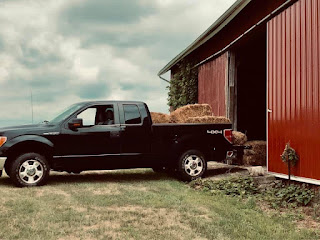
Ode to a Truck

Wednesday, I took my travel companion on its last trip, from which it didn't come home with me. I took it for a drive the day before, to...